Friday, May 4, 2018

Boost Your Brain Power: Sniffing Rosemary Can Make You Smarter

Boost Your Brain Power: Sniffing Rosemary Can Make You Smarter

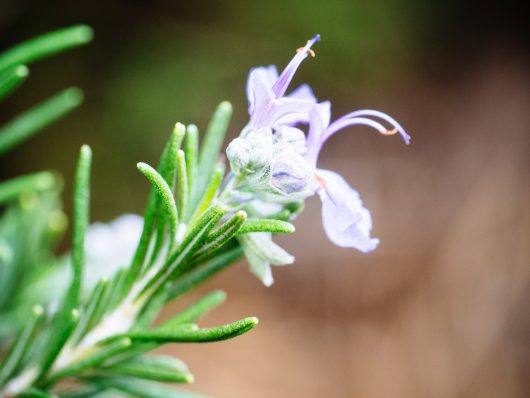
Rosemary, derived from the Latin word rosmarinus meaning "dew of the sea," has long been known for its healing and cognitive benefits, seemingly helping with everything from hair loss to memory lapses.

The Mediterranean herb has been associated with memory for thousands of years, as evident in Shakespeare's Ophelia where the eponymous character described various herbs and their powers: "There's rosemary, that's for remembrance…" (Hamlet, Act IV, Scene 5)

But can rosemary actually improve memory, or is it merely folk medicine?

There's a small but growing body of research that has found the smell of rosemary can actually stimulate your memory, improve your mood, and make you more alert and accurate.

The scent of rosemary increases mental alertness and accuracy

In one study, a team of scientists at University of Northumbria (United Kingdom) assessed the olfactory impact of rosemary and lavender essential oils on cognitive performance and mood in a group of volunteers. The volunteers were placed in cubicles infused with one of the two scents (or none at all) and given a series of memory- and attention-based tasks.

The study found that rosemary greatly enhanced memory and alertness while lavender impaired their working memory and their reaction times to tasks. (Not surprising, since lavender is often associated with calmness and sleep.)

Another study by the same team of scientists looked specifically at the effects of 1,8-cineole, a volatile chemical compound in the oil that gives rosemary its pungent aroma. The compound works in much the same way as the drugs used to treat dementia: it increases a chief neurotransmitter called acetylcholine, which assists in learning, memory, and arousal.

Volunteers were exposed to varying amounts of 1,8-cineole while asked to complete certain mental tasks. The study found that the more 1,8-cineole they inhaled, the faster and more accurate they were on the cognitive tests.

(The chemical compound is not unique to rosemary, by the way — it's also found in other highly aromatic plants like bay, sage, and eucalyptus. These plants release their fragrant oils to deter herbivores and attract the predators of herbivores.)

Rosemary oil contains 1,8-cineole, which enhances memory and improves your mood

If you're wondering how simply smelling something can have that type of effect on the brain, it turns out that inhalation is one of the best ways of getting drugs into the brain. (You might remember the post I wrote about Mycobacterium vaccae, or "nature's Prozac.")

When you eat a drug, it gets broken down in the liver (which processes everything absorbed by the gut) but when you inhale it, small molecules pass into the bloodstream and make their way to the brain without being broken down first. Blood samples from the volunteers confirmed this, as the scientists found traces of 1,8-cineole and other compounds from rosemary oil in their blood.

The smell of rosemary stimulates the brain and boosts working memory

More recently, the University of Northumbria researchers conducted a similar study with children, and found that the scent of rosemary significantly enhanced their working memory.

How and why it works is still largely unknown, and eating rosemary does not seem to have the same effect on the brain. But, these findings indicate rosemary essential oil could have potential as a straightforward and cost-effective solution to improving academic performance in children, as well as workplace performance in adults.

There have been other peer-reviewed studies on the physiological effects of rosemary oil on the human body, and more findings that suggest the scent of rosemary can reduce stress and anxiety (leading to increased concentration and better performance).

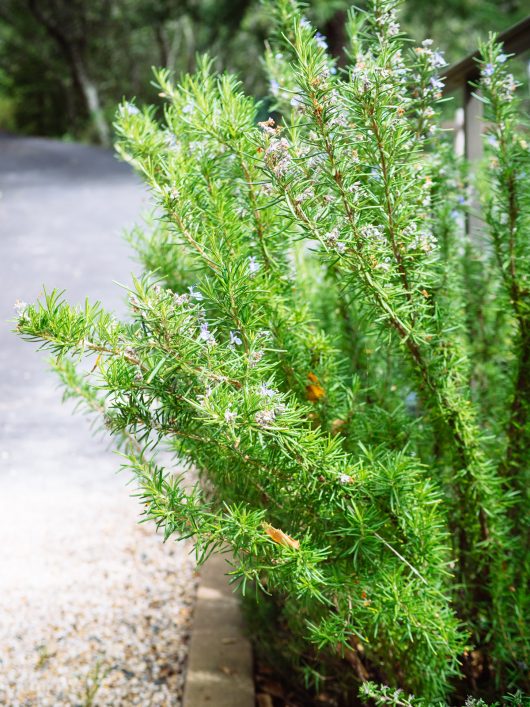
This is not to say you should be sniffing rosemary all day every day (how much and how often for optimal benefit is still to be determined), but if there's a chance rosemary can make you smarter… why not grow some rosemary in a pot by the window, or rub a few sprigs of fresh rosemary when you feel like you're lacking focus?

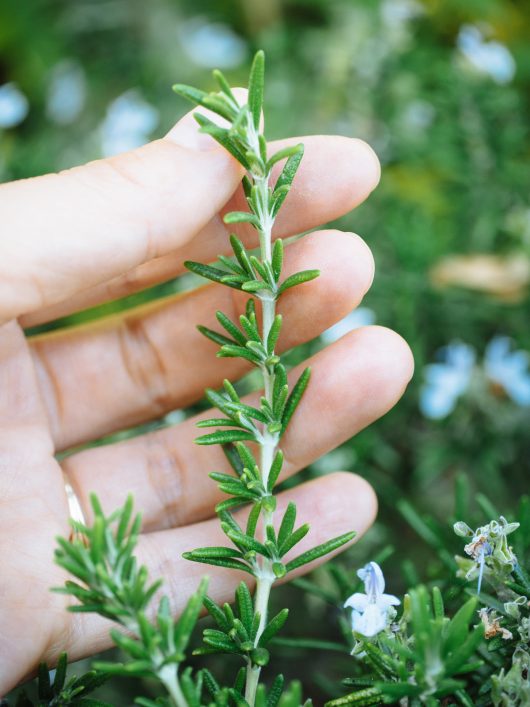
Rub fresh rosemary leaves to release their scent or diffuse rosemary essential oil to increase concentration and improve performance

And if fresh rosemary isn't available, running a diffuser with a few drops of rosemary essential oil would have the same brain-boosting benefits. (Not to mention your home will smell amazing.)

Aromatherapy Sources

Turn on your JavaScript to view content
Bonnie Plants Rosemary Starter Plants | InnoGear Vase-Shaped Essential Oil Diffuser | VicTsing Essential Oil Diffuser | VicTsing Mini Essential Oil Diffuser | Plant Therapy Organic Rosemary 1,8-Cineole Essential Oil

The post Boost Your Brain Power: Sniffing Rosemary Can Make You Smarter appeared first on Garden Betty.


This mailing is sponsored by

ClassyGroundcovers.com helps you beautify your world with stunning and exotic perennials, and offers Free Shipping. Customers rate them 4.9 stars at Google and top 30 out of 7000 at DavesGarden.com, take 20% off your order with discount code "gardenbetty" (expires May 31, 2018).


from Garden Betty https://ift.tt/2IbHvXF

Shift by Aragon on Vancouver’s Westside

Shift by Aragon Properties is a new 6 storey condo development located on Quebec street and 35th Avenue on Vancouver's Westside. This project will offer 43 1-3 bedroom condominiums. Bordered by Queen Elizabeth Park one block West, and Main Street one block East, Shift will join an already thriving neighborhood.

The post Shift by Aragon on Vancouver's Westside appeared first on Vancouver New Condos.


from Buildings – Vancouver New Condos https://ift.tt/2HT3Wxr

Lily Terrace by Lanstone in Langley

Lily Terrace by Lanstone Homes is a new 3-storey condo development located in the heart of Fort Langley. This project will have an exclusive collection of 24 modern signature residences. These exclusive residences marry the best of both worlds—a contemporary vision is thoughtfully executed with the care and attention of traditional craftsmanship. Pitched rooflines and paned windows evoke the grace of an earlier era. The cornerstone of a thriving heritage conservation area.

The post Lily Terrace by Lanstone in Langley appeared first on Vancouver New Condos.


from Buildings – Vancouver New Condos https://ift.tt/2FJDBQx

Hudson Place One in downtown Victoria

Hudson Place One by Townline is a new modern 25-storey development located at 777 Herald Street in downtown Victoria. This project will offer 176 luxury intelligently-designed 1-, 2- and 3-bedroom condominiums.The Hudson District is a vibrant, amenity-rich, pedestrian-friendly village with doorstep access to a unique mix of artisan shops, daily conveniences, services, and leisure and wellness activities that are the heart and soul of the community. Its central location in beautiful downtown Victoria provides easy access to transit.

The post Hudson Place One in downtown Victoria appeared first on Vancouver New Condos.


from Buildings – Vancouver New Condos https://ift.tt/2jt1Tpc

Thursday, May 3, 2018

Garden Betty’s Homemade Whole Grain Chicken Feed

Garden Betty’s Homemade Whole Grain Chicken Feed

Update: I also have a corn-free version of my homemade feed! And for easy formulating, download the Garden Betty Chicken Feed Calculator to easily manage costs, calculate protein content, and custom mix your feed on the fly.

Several years ago, I started mixing my own soy-free, mostly organic, whole grain chicken feed. The decision to feed a whole grain diet — versus a commercially formulated diet — is a personal one based on what I believe is best for my chickens. Luckily, it also turned out to be an economical decision and a benefit to my own diet.

Homemade feed is not as expensive or complicated as you may have thought or been told. My small flock of chickens lays over a dozen eggs a week on a hippie diet of whole grains and leafy greens. Their feathers are soft and shiny, their personalities as perky as ever… so I must be doing something right!
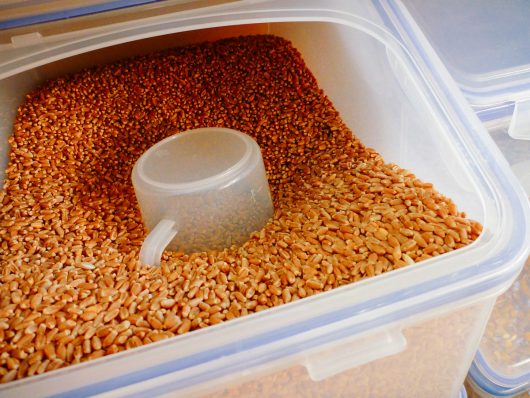
Whole grains stored in airtight bins

Why make your own whole grain feed?

Commercial chicken feed comes in crumble or pellet form, neither of which looks like real food to me. Since real food comes out of my chickens, I want real food to go into them.

Crumbles and pellets are already formulated to contain the nutritional balance that a chicken needs, but the process of cracking, mashing, pressing and/or heating the grains (often times, not even quality grains) causes them to go stale and lose some of their nutritional value — even months before you buy them.

On the other hand, whole grains (which you can pick and choose) retain all of their nutrients. With a whole grain diet, I’ve noticed that my chickens eat less and poop less (as opposed to the crumble diet they started on). This leads me to believe that their bodies are processing the food better and it’s not just passing through them.

Is a whole grain diet a complete diet?

Like humans, chickens need a diverse diet and sometimes they need a different diet in winter than they do in summer.

The greater variety of grains, legumes and seeds you can provide your chickens, the healthier and happier they will be. Layers need at least 16 percent protein and the rest is common sense — not too much fat, not too many carbs, and that last piece of chocolate cake is probably not a good idea. It’s all about balance.

I imagine that people wanting to make their own feed at home are likely also the sort of chicken keepers that let their chickens forage for bugs and weeds, or give their chickens mealworm treats and kitchen scraps. So overall, yes — this is a complete diet.

Why soy-free and organic?

Because of its cheapness, availability, and high amount of protein, soy is a large part of a commercial chicken’s diet. But it’s also an incomplete protein, an unnatural source of food, and a highly processed food. As with anything highly processed, it has potentially harmful health effects ranging from vitamin deficiencies to hormone disruptions — especially when consumed in the crazy amounts that our culture does.

Soy is one of the most genetically-modified foods in the world, and it’s included in almost everything we eat. I know I can’t avoid it in my diet, but I can limit my intake of soy by choosing not to feed it to my chickens. You are what you eat.

(A pro-soy study found that soy protein transferred to the egg yolks and tissues of commercial chickens — even commercial “organic” chickens — fed a predominantly soy diet.)

An all organic feed was originally not as important to me as a soy-free feed. I felt the benefits of a whole grain diet outweighed those of an organic (but processed) diet. As it turned out, my homemade feed is almost all organic, thanks to bulk purchases from Azure Standard and my local market.

What does it cost? Is it worth all the work?

My homemade feed actually costs the same as the commercial feed at my local feed store. This may not be true for everyone, but on the west coast, a premium bag of soy-free, organic layer pellets averages $0.70 per pound. My soy-free, almost organic, whole grain feed costs $0.69 per pound (and would even be less if I purchased in greater bulk — but I have a small flock and very limited storage).

An unexpected advantage of mixing my own feed is that I can share a lot of the grains, legumes, and seeds with my chickens. The ingredients are all human grade and mostly organic, and the fact that they can feed the whole household makes buying 10- or 25-pound bags of grains more feasible.

While there was a lot of legwork in the beginning to make my own recipe, the payoff is learning more about nutrition than I ever thought I would and knowing what goes into my chickens’ food (and ultimately, what goes into me).

I mix a new batch of feed two or three times a month. It feels like garden therapy. I have a strange love for running my hands through a mountain of whole grains. It’s not any more work than refilling the feeder with bagged feed, and I have the option of changing up the mix every once in a while, rather than being stuck with the same 50-pound bag of commercial feed.

(This is advantageous if you have a mixed flock of chicks, pullets, and/or layers with varying protein needs, or want to alter their diet in winter or summer. I cover the nutritional needs of different age groups in this post.)

How do you find the ingredients?

Most of my grains are purchased from Azure Standard. A natural food co-op that delivers nationwide, Azure Standard carries bulk bags of hard-to-find items like kamut and kelp, and sometimes at a better price than Amazon. The rest of my ingredients come from local stores with a wide variety of bulk grains.

(WinCo Foods was my go-to in Southern California, and still my favorite for cost, selection, and convenience. Market of Choice is my current stop in Central Oregon when I need a last-minute refill or want to try something new.)

You can find more exotic grains at places like Whole Foods Market, Sprouts Farmers Market, and in countless other natural food grocers and bulk food markets. Your local feed store or grain mill will also carry the basics like oats, wheat, millet, and corn. Oyster shells and grit are common ingredients found at any feed store or farm/livestock/poultry supplier.

Okay, now how do you store all those ingredients?

Whole grains store for a very long time in cool and dark locations. Unless you go through a lot of feed quickly, I wouldn’t suggest keeping the grains in their original bags once opened, because weevils and rodents will think they’ve scored a buffet.

If you have a lot of space or a lot of chickens, you can dump all your ingredients into a large, lidded metal trash can, mix them all up, and scoop out from there. If you lack space or keep a small flock, like I do, you can store the ingredients in airtight bins and mix as you go.
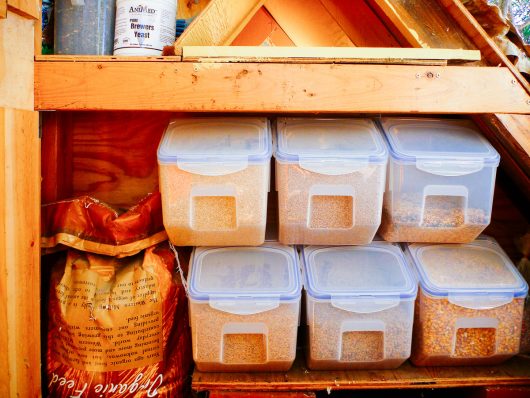
Whole grains stored in airtight bins

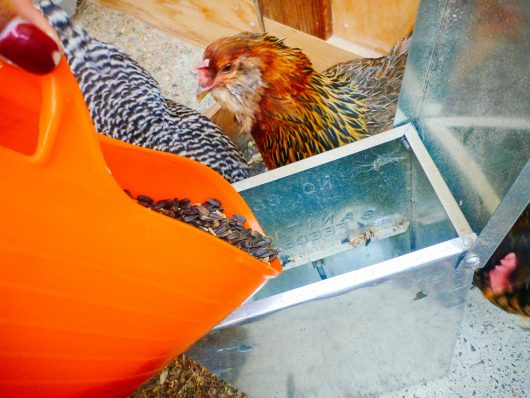
I scoop everything into a flexible bucket, give it a good mix, and pour the fresh food into the feeder. It’s like Christmas Day for the chickens… multiple times a month!
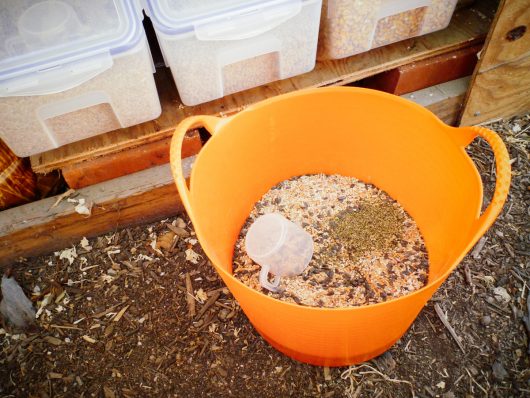
Mixing up grains, legumes and seeds for my homemade feed

Refilling the chicken feeder with homemade whole grain feed

(Since this post was originally written, I’ve moved on to a new coop that doesn’t have on-site storage, so I keep all of my grains and seeds in the garage. I’ve also added a few other containers — that I like just as much, if not more than my first containers — which are all linked in my sources at the end of this post.)
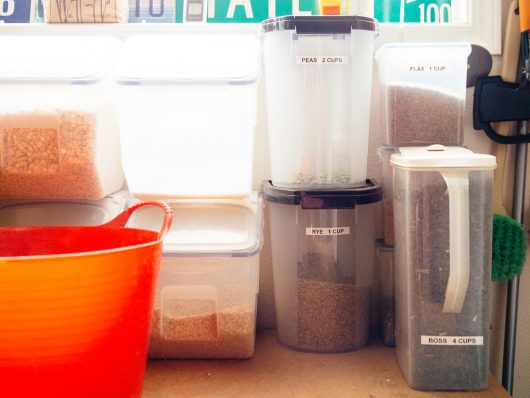
Storage containers filled with whole grains and seeds

How do you switch from crumbles/pellets to whole grains?

Start by gradually mixing in a little bit of whole grains into your chickens’ current feed to adapt their gizzards. If they don’t forage frequently, make sure you offer them grit in a separate, free-choice feeder. Chickens don’t have teeth, so they swallow a small amount of grit and store them in their gizzards to grind up food. This is especially important for whole grains that need to be broken down.

Increase the amount of whole grains in their feed each week, until eventually you’re only feeding them whole grains. It may take a few weeks for your chickens to adjust to the change, so don’t be alarmed if egg production drops off a bit.

They may also start flinging grains all over the place (you’ll soon learn what they like and don’t like) or picking out certain grains first. (I believe chickens know what their bodies need nutritionally, so some days they may feed on more protein, less calcium, etc.)

Because of this, it’s a good idea to start with small amounts of different grains, and see what your chickens will eat before buying in bulk.

Recipe, please!

My homemade feed is around 17 percent protein, which is in the target range for laying hens. This is a good number to know if you’re only feeding whole grains. But if you supplement their diet with pasture, scratch, mealworms, and kitchen scraps, all that food will increase (or decrease) the amount of protein they take in each day, so don’t get too hung up on the number.

The cool thing about making your own feed is being able to custom make it for your flock. Read on for my suggestions and alternatives so you can create your own recipe too.

Garden Betty’s Homemade Whole Grain Chicken Feed

Makes 8 1/2 pounds (fills 10-pound feeder)

Ingredients

4 cups oat groats
4 cups black oil sunflower seeds
4 cups hard red wheat berries
2 cups soft white wheat berries
2 cups kamut
2 cups millet
2 cups whole corn
1 cup lentils
1 cup sesame seeds
1 cup flax seeds
1/2 cup brewer’s yeast
1/4 cup kelp granules
Free-choice oyster shells
Free-choice grit

Oats are rich in protein (around 16 percent), B vitamins, calcium and fiber. Oats are also a good (and cheap) source of energy. All oats — no matter how they’re processed — are nutritionally similar, so you can feed oat groats, steel-cut oats, rolled oats, and quick oats interchangeably.

Black oil sunflower seeds (often called BOSS) are like candy to chickens. But good candy! BOSS is high in protein (averaging 17 percent), rich in minerals and vitamins, and the high oil content gives feathers a beautiful gloss. BOSS is typically found in the bird seed aisle at pet and feed stores, and I buy mine from a local farm and garden store. You can also substitute striped sunflower seeds (the seeds that are typically packaged as human snacks), but they tend to be larger than BOSS with thicker shells.

Wheat is a major energy source for chickens. If you can find both varieties, buy hard red wheat and soft white wheat for the best nutritional balance. Otherwise, feed only hard red wheat, as it contains more protein (around 15 percent).

Kamut is actually a brand of khorasan wheat, but these days the grain is simply known as kamut… the way kleenex is synonymous with tissue. It’s an ancient Egyptian grain that’s nutritionally superior to other wheat in terms of protein (18 percent), magnesium, zinc, and vitamin E.

Millet (unhulled) is found in most bird seed, and in fact, the millet I buy is a mix of red and white millet sold at the store as “wild bird food.” It’s less expensive than human-grade hulled millet, but still rich in amino acids and iron. Feed stores sometimes label the unhulled white millet as “proso millet” (not to be confused with spray millet, which is a long and thin seed head).

Whole corn is a fairly large kernel, so depending on your chickens, you may have to crack or grind the corn first. You can also feed popcorn kernels, which are half the size and easier for smaller breeds to pick up. Corn is low in protein, vitamins, and minerals, but it does provide energy and fat (which is especially helpful in winter).

Lentils are very high in protein (at least 26 percent) and if your chickens take to them, it’s worth adding more to your feed. Mine don’t particularly care for lentils or any legumes, for that matter, so I only add a small portion to my feed.

Sesame seeds have one of the highest amounts of protein in a seed (around 25 percent), so they’re especially good for picky chickens that won’t eat legumes. They’re also one of the more expensive ingredients in my feed, so I add them sparingly.

Flax seeds boost omega-3 fatty acids in eggs, and are also rich in protein (37 percent), B vitamins, and minerals.

Brewer’s yeast (animal grade) can be found online or at local feed stores. You can buy human-grade brewer’s yeast too, but you’ll end up paying double (at least). It’s an important source of B vitamins and protein (around 35 percent) for chickens. (On a side note, I’ve also read that feeding brewer’s yeast to your dog will repel ticks and fleas, in addition to providing all the other good stuff.)

Kelp granules (or kelp meal) are basically little bits of dried seaweed. Kelp contains essential vitamins, minerals, amino acids, and salt that your chickens need. It promotes healthy growth, increases egg production, and darkens yolk color — an overall superior supplement.

Oyster shells provide the necessary calcium to strengthen your chickens’ eggshells. Feed this free choice, and they’ll take what they need each day. You can also feed them clean, crushed eggshells to put all that calcium back into their bodies.

Grit is typically limestone or granite gravel that aids the gizzard in grinding food. If your chickens free range, they’ll probably pick up little stones on their own and won’t take as much from the free-choice grit.

Other good sources of protein include triticale, field peas, and split peas (or any peas in general — many soy-free commercial feeds rely on peas to provide sufficient protein). If money is no object, you could also add quinoa, spelt, wild rice, amaranth seeds, nyjer seeds, hemp seeds, or shelled peanuts as excellent protein sources. Feeding lower-protein grains like rye, barley, buckwheat, and sorghum (milo) in small amounts will balance the higher-protein (and usually higher-cost) grains.

Try not to make your feed too heavy on any particular grain. The University of Kentucky College of Agriculture offers good information on the pros and cons of common feed grains on their Poultry Extension site.

At the end of the day, if you feed a balanced meal of grains, greens and garden pests — with a little treat here and there — numbers are not as important as a diverse diet.

Feed Sources

Turn on your JavaScript to view content
Lock & Lock Bulk Storage Bin | Lock & Lock Square Tall Food Storage Container | Buddeez Plastic Storage Container for Pet Food (similar) | Iris Nesting Airtight Pet Food Container | Tubtrugs Storage Bucket | Miller Baby Fig Feeder (similar) | Little Giant Galvanized Hanging Feeder | AniMed Pure Brewers Yeast | Starwest Botanicals Organic Kelp Granules | Scratch and Peck Feeds Oyster Shell | Scratch and Peck Feeds Grower Grit

This post updated from an article that originally appeared on June 29, 2012.

The post Garden Betty’s Homemade Whole Grain Chicken Feed appeared first on Garden Betty.


This mailing is sponsored by

ClassyGroundcovers.com helps you beautify your world with stunning and exotic perennials, and offers Free Shipping. Customers rate them 4.9 stars at Google and top 30 out of 7000 at DavesGarden.com, take 20% off your order with discount code "gardenbetty" (expires May 31, 2018).


from Garden Betty https://ift.tt/2Ksd8KF

Wednesday, May 2, 2018

Garden Betty’s Homemade Whole Grain Chicken Feed

Garden Betty's Homemade Whole Grain Chicken Feed

Update: I also have a corn-free version of my homemade feed! And for easy formulating, download the Garden Betty Chicken Feed Calculator to easily manage costs, calculate protein content, and custom mix your feed on the fly.

Several years ago, I started mixing my own soy-free, mostly organic, whole grain chicken feed. The decision to feed a whole grain diet — versus a commercially formulated diet — is a personal one based on what I believe is best for my chickens. Luckily, it also turned out to be an economical decision and a benefit to my own diet.

Homemade feed is not as expensive or complicated as you may have thought or been told. My small flock of chickens lays over a dozen eggs a week on a hippie diet of whole grains and leafy greens. Their feathers are soft and shiny, their personalities as perky as ever… so I must be doing something right!

Whole grains stored in airtight bins

Why make your own whole grain feed?

Commercial chicken feed comes in crumble or pellet form, neither of which looks like real food to me. Since real food comes out of my chickens, I want real food to go into them.

Crumbles and pellets are already formulated to contain the nutritional balance that a chicken needs, but the process of cracking, mashing, pressing and/or heating the grains (often times, not even quality grains) causes them to go stale and lose some of their nutritional value — even months before you buy them.

On the other hand, whole grains (which you can pick and choose) retain all of their nutrients. With a whole grain diet, I've noticed that my chickens eat less and poop less (as opposed to the crumble diet they started on). This leads me to believe that their bodies are processing the food better and it's not just passing through them.

Is a whole grain diet a complete diet?

Like humans, chickens need a diverse diet and sometimes they need a different diet in winter than they do in summer.

The greater variety of grains, legumes and seeds you can provide your chickens, the healthier and happier they will be. Layers need at least 16 percent protein and the rest is common sense — not too much fat, not too many carbs, and that last piece of chocolate cake is probably not a good idea. It's all about balance.

I imagine that people wanting to make their own feed at home are likely also the sort of chicken keepers that let their chickens forage for bugs and weeds, or give their chickens mealworm treats and kitchen scraps. So overall, yes — this is a complete diet.

Why soy-free and organic?

Because of its cheapness, availability, and high amount of protein, soy is a large part of a commercial chicken's diet. But it's also an incomplete protein, an unnatural source of food, and a highly processed food. As with anything highly processed, it has potentially harmful health effects ranging from vitamin deficiencies to hormone disruptions — especially when consumed in the crazy amounts that our culture does.

Soy is one of the most genetically-modified foods in the world, and it's included in almost everything we eat. I know I can't avoid it in my diet, but I can limit my intake of soy by choosing not to feed it to my chickens. You are what you eat.

(A pro-soy study found that soy protein transferred to the egg yolks and tissues of commercial chickens — even commercial "organic" chickens — fed a predominantly soy diet.)

An all organic feed was originally not as important to me as a soy-free feed. I felt the benefits of a whole grain diet outweighed those of an organic (but processed) diet. As it turned out, my homemade feed is almost all organic, thanks to bulk purchases from Azure Standard and my local market.

What does it cost? Is it worth all the work?

My homemade feed actually costs the same as the commercial feed at my local feed store. This may not be true for everyone, but on the west coast, a premium bag of soy-free, organic layer pellets averages $0.70 per pound. My soy-free, almost organic, whole grain feed costs $0.69 per pound (and would even be less if I purchased in greater bulk — but I have a small flock and very limited storage).

An unexpected advantage of mixing my own feed is that I can share a lot of the grains, legumes, and seeds with my chickens. The ingredients are all human grade and mostly organic, and the fact that they can feed the whole household makes buying 10- or 25-pound bags of grains more feasible.

While there was a lot of legwork in the beginning to make my own recipe, the payoff is learning more about nutrition than I ever thought I would and knowing what goes into my chickens' food (and ultimately, what goes into me).

I mix a new batch of feed two or three times a month. It feels like garden therapy. I have a strange love for running my hands through a mountain of whole grains. It's not any more work than refilling the feeder with bagged feed, and I have the option of changing up the mix every once in a while, rather than being stuck with the same 50-pound bag of commercial feed.

(This is advantageous if you have a mixed flock of chicks, pullets, and/or layers with varying protein needs, or want to alter their diet in winter or summer. I cover the nutritional needs of different age groups in this post.)

How do you find the ingredients?

Most of my grains are purchased from Azure Standard. A natural food co-op that delivers nationwide, Azure Standard carries bulk bags of hard-to-find items like kamut and kelp, and sometimes at a better price than Amazon. The rest of my ingredients come from local stores with a wide variety of bulk grains.

(WinCo Foods was my go-to in Southern California, and still my favorite for cost, selection, and convenience. Market of Choice is my current stop in Central Oregon when I need a last-minute refill or want to try something new.)

You can find more exotic grains at places like Whole Foods Market, Sprouts Farmers Market, and in countless other natural food grocers and bulk food markets. Your local feed store or grain mill will also carry the basics like oats, wheat, millet, and corn. Oyster shells and grit are common ingredients found at any feed store or farm/livestock/poultry supplier.

Okay, now how do you store all those ingredients?

Whole grains store for a very long time in cool and dark locations. Unless you go through a lot of feed quickly, I wouldn't suggest keeping the grains in their original bags once opened, because weevils and rodents will think they've scored a buffet.

If you have a lot of space or a lot of chickens, you can dump all your ingredients into a large, lidded metal trash can, mix them all up, and scoop out from there. If you lack space or keep a small flock, like I do, you can store the ingredients in airtight bins and mix as you go.

Whole grains stored in airtight bins

I scoop everything into a flexible bucket, give it a good mix, and pour the fresh food into the feeder. It's like Christmas Day for the chickens… multiple times a month!

Mixing up grains, legumes and seeds for my homemade feed

Refilling the chicken feeder with homemade whole grain feed

(Since this post was originally written, I've moved on to a new coop that doesn't have on-site storage, so I keep all of my grains and seeds in the garage. I've also added a few other containers — that I like just as much, if not more than my first containers — which are all linked in my sources at the end of this post.)

Storage containers filled with whole grains and seeds

How do you switch from crumbles/pellets to whole grains?

Start by gradually mixing in a little bit of whole grains into your chickens' current feed to adapt their gizzards. If they don't forage frequently, make sure you offer them grit in a separate, free-choice feeder. Chickens don't have teeth, so they swallow a small amount of grit and store them in their gizzards to grind up food. This is especially important for whole grains that need to be broken down.

Increase the amount of whole grains in their feed each week, until eventually you're only feeding them whole grains. It may take a few weeks for your chickens to adjust to the change, so don't be alarmed if egg production drops off a bit.

They may also start flinging grains all over the place (you'll soon learn what they like and don't like) or picking out certain grains first. (I believe chickens know what their bodies need nutritionally, so some days they may feed on more protein, less calcium, etc.)

Because of this, it's a good idea to start with small amounts of different grains, and see what your chickens will eat before buying in bulk.

Recipe, please!

My homemade feed is around 17 percent protein, which is in the target range for laying hens. This is a good number to know if you're only feeding whole grains. But if you supplement their diet with pasture, scratch, mealworms, and kitchen scraps, all that food will increase (or decrease) the amount of protein they take in each day, so don't get too hung up on the number.

The cool thing about making your own feed is being able to custom make it for your flock. Read on for my suggestions and alternatives so you can create your own recipe too.

Garden Betty's Homemade Whole Grain Chicken Feed

Makes 8 1/2 pounds (fills 10-pound feeder)

Ingredients

4 cups oat groats
4 cups black oil sunflower seeds
4 cups hard red wheat berries
2 cups soft white wheat berries
2 cups kamut
2 cups millet
2 cups whole corn
1 cup lentils
1 cup sesame seeds
1 cup flax seeds
1/2 cup brewer's yeast
1/4 cup kelp granules
Free-choice oyster shells
Free-choice grit

Oats are rich in protein (around 16 percent), B vitamins, calcium and fiber. Oats are also a good (and cheap) source of energy. All oats — no matter how they're processed — are nutritionally similar, so you can feed oat groats, steel-cut oats, rolled oats, and quick oats interchangeably.

Black oil sunflower seeds (often called BOSS) are like candy to chickens. But good candy! BOSS is high in protein (averaging 17 percent), rich in minerals and vitamins, and the high oil content gives feathers a beautiful gloss. BOSS is typically found in the bird seed aisle at pet and feed stores, and I buy mine from a local farm and garden store. You can also substitute striped sunflower seeds (the seeds that are typically packaged as human snacks), but they tend to be larger than BOSS with thicker shells.

Wheat is a major energy source for chickens. If you can find both varieties, buy hard red wheat and soft white wheat for the best nutritional balance. Otherwise, feed only hard red wheat, as it contains more protein (around 15 percent).

Kamut is actually a brand of khorasan wheat, but these days the grain is simply known as kamut… the way kleenex is synonymous with tissue. It's an ancient Egyptian grain that's nutritionally superior to other wheat in terms of protein (18 percent), magnesium, zinc, and vitamin E.

Millet (unhulled) is found in most bird seed, and in fact, the millet I buy is a mix of red and white millet sold at the store as "wild bird food." It's less expensive than human-grade hulled millet, but still rich in amino acids and iron. Feed stores sometimes label the unhulled white millet as "proso millet" (not to be confused with spray millet, which is a long and thin seed head).

Whole corn is a fairly large kernel, so depending on your chickens, you may have to crack or grind the corn first. You can also feed popcorn kernels, which are half the size and easier for smaller breeds to pick up. Corn is low in protein, vitamins, and minerals, but it does provide energy and fat (which is especially helpful in winter).

Lentils are very high in protein (at least 26 percent) and if your chickens take to them, it's worth adding more to your feed. Mine don't particularly care for lentils or any legumes, for that matter, so I only add a small portion to my feed.

Sesame seeds have one of the highest amounts of protein in a seed (around 25 percent), so they're especially good for picky chickens that won't eat legumes. They're also one of the more expensive ingredients in my feed, so I add them sparingly.

Flax seeds boost omega-3 fatty acids in eggs, and are also rich in protein (37 percent), B vitamins, and minerals.

Brewer's yeast (animal grade) can be found online or at local feed stores. You can buy human-grade brewer's yeast too, but you'll end up paying double (at least). It's an important source of B vitamins and protein (around 35 percent) for chickens. (On a side note, I've also read that feeding brewer's yeast to your dog will repel ticks and fleas, in addition to providing all the other good stuff.)

Kelp granules (or kelp meal) are basically little bits of dried seaweed. Kelp contains essential vitamins, minerals, amino acids, and salt that your chickens need. It promotes healthy growth, increases egg production, and darkens yolk color — an overall superior supplement.

Oyster shells provide the necessary calcium to strengthen your chickens' eggshells. Feed this free choice, and they'll take what they need each day. You can also feed them clean, crushed eggshells to put all that calcium back into their bodies.

Grit is typically limestone or granite gravel that aids the gizzard in grinding food. If your chickens free range, they'll probably pick up little stones on their own and won't take as much from the free-choice grit.

Other good sources of protein include triticale, field peas, and split peas (or any peas in general — many soy-free commercial feeds rely on peas to provide sufficient protein). If money is no object, you could also add quinoa, spelt, wild rice, amaranth seeds, nyjer seeds, hemp seeds, or shelled peanuts as excellent protein sources. Feeding lower-protein grains like rye, barley, buckwheat, and sorghum (milo) in small amounts will balance the higher-protein (and usually higher-cost) grains.

Try not to make your feed too heavy on any particular grain. The University of Kentucky College of Agriculture offers good information on the pros and cons of common feed grains on their Poultry Extension site.

At the end of the day, if you feed a balanced meal of grains, greens and garden pests — with a little treat here and there — numbers are not as important as a diverse diet.

Feed Sources

Turn on your JavaScript to view content
Lock & Lock Bulk Storage Bin | Lock & Lock Square Tall Food Storage Container | Buddeez Plastic Storage Container for Pet Food (similar) | Iris Nesting Airtight Pet Food Container | Tubtrugs Storage Bucket | Miller Baby Fig Feeder (similar) | Little Giant Galvanized Hanging Feeder | AniMed Pure Brewers Yeast | Starwest Botanicals Organic Kelp Granules | Scratch and Peck Feeds Oyster Shell | Scratch and Peck Feeds Grower Grit

This post updated from an article that originally appeared on June 29, 2012.

The post Garden Betty's Homemade Whole Grain Chicken Feed appeared first on Garden Betty.


This mailing is sponsored by

ClassyGroundcovers.com helps you beautify your world with stunning and exotic perennials, and offers Free Shipping. Customers rate them 4.9 stars at Google and top 30 out of 7000 at DavesGarden.com, take 20% off your order with discount code "gardenbetty" (expires May 31, 2018).


from Garden Betty https://ift.tt/2Ksd8KF
Wednesday, April 25, 2018

Meridian by Townline in the centre of Burquitlam

Meridian by Townline in the centre of Burquitlam, an upcoming luxurious 32-storey residential high-rise tower compromised of 198 carefully crafted intelligently designed 1-, 2- and 3-bedroom homes, along with a limited collection of only a few exclusive two-level 3-bedroom townhomes. Conveniently located at Cottonwood Avenue and Clarke Road; in the centre of Burquitlam’s burgeoning community, adjacent to the Evergreen SkyTrain line and just steps from a plethora of urban amenities.

Opening 2018

The post Meridian by Townline in the centre of Burquitlam appeared first on Vancouver New Condos.


from Buildings – Vancouver New Condos https://ift.tt/2HppYeO